

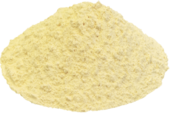
High-purity cerium carbonate and industrial cerium hydroxide raw materials are important rare earth compounds used across
catalysts, polishing materials, specialty glass, metallurgy, and advanced chemical processing. In the global rare earth
supply chain, these cerium-based intermediates are widely traded in bulk and often purchased at wholesale price levels
for industrial production. Because buyers compare purity, particle size, moisture content, packaging, and shipment terms,
the wholesale price of high-purity cerium carbonate and industrial cerium hydroxide raw material can vary significantly
by specification and market conditions.
This page provides a SEO-friendly, industry-focused overview of cerium carbonate and cerium hydroxide, including product
definitions, common applications, major advantages, typical specifications, pricing factors, quality control considerations,
and buying guidance. It is designed for use in blog content, category pages, product knowledge pages, and industrial
directory pages. The content below is general and does not recommend any specific company.
High-purity cerium carbonate is a rare earth compound produced from cerium-containing feedstock through controlled
precipitation, purification, filtration, and drying processes. It is typically used as an intermediate material in the
production of other cerium compounds, catalyst materials, polishing powders, and functional advanced materials. In many
industrial purchasing scenarios, cerium carbonate is selected for its chemical reactivity, relatively stable composition,
and compatibility with downstream processing.
From a manufacturing perspective, high-purity cerium carbonate is valued when the application requires lower levels of
impurities such as iron, calcium, sulfate, chloride, and other lanthanides. High-purity grades are commonly associated
with consistent batch performance, predictable reaction behavior, and improved final product quality. As a result,
high-purity cerium carbonate Wholesale price is usually higher than standard industrial grades.
Industrial cerium hydroxide raw material is a cerium-based alkaline compound used as an intermediate in rare earth
processing and chemical production. It is commonly obtained by precipitation from cerium salt solutions under controlled
pH and process conditions. The product is often supplied in wet cake or dried powder form depending on customer needs.
Cerium hydroxide raw material is widely used in catalyst manufacturing, water treatment-related chemical systems, polishing
formulations, and rare earth refining processes. Industrial-grade cerium hydroxide is often purchased in bulk because it
serves as a raw material for later conversion into more specialized cerium compounds. Wholesale pricing depends on purity,
water content, filtration quality, and whether the material is supplied as a wet intermediate or fully dried product.
Cerium is one of the most abundant light rare earth elements and has become an essential raw material for many industrial
sectors. Its compounds are used in chemical processing, automotive catalysts, fuel additives, glass polishing, UV
protection materials, and specialized functional materials. Because cerium compounds support a wide range of downstream
products, the wholesale market remains active and sensitive to raw material availability, purity requirements, and global
supply chain trends.
Wholesale buyers often compare cerium carbonate and cerium hydroxide because both are intermediate raw materials with
different technical advantages. Cerium carbonate may be preferred where a carbonate precursor is needed, while cerium
hydroxide may be selected for specific precipitation and conversion steps. Understanding these differences helps buyers
choose the right material and manage procurement cost more effectively.
Catalyst precursor manufacturing
Rare earth oxide production
Polishing powder and polishing slurry raw materials
Specialty glass and optical materials
Ceramic and electronic material processing
Metal treatment and alloy preparation
Research and pilot-scale chemical synthesis
In many of these applications, purity and consistency are more important than low initial price. Buyers looking for
high-purity cerium carbonate wholesale price should consider not only the cost per kilogram, but also the long-term
benefits of stable conversion yield, reduced impurity-related defects, and improved process repeatability.
Rare earth intermediate processing
Cerium oxide precursor production
Catalyst support and catalyst raw material systems
Polishing material precursor processing
Chemical reagent formulation
Industrial filtration and precipitation systems
Custom compound manufacturing
Cerium hydroxide raw material is especially useful where a hydroxide precursor is preferred for subsequent conversion
reactions. Industrial cerium hydroxide wholesale price may be lower than some higher-purity, specialty-processed forms,
but the final purchasing decision should always consider downstream conversion performance and moisture control.
| Advantage |
|---|
| Industry Benefit |
|---|
| High chemical purity |
| Supports higher-quality downstream products and more stable processing |
| Good batch consistency |
| Reduces variation in production and improves manufacturing control |
| Suitable for precursor use |
| Works well in the synthesis of other cerium compounds |
| Controlled impurity profile |
| Helps minimize defects in catalysts, polishing materials, and specialty glass |
| Bulk supply availability |
| Supports large-volume industrial procurement and wholesale trading |
| Advantage |
|---|
| Industry Benefit |
|---|
| Flexible intermediate form |
| Useful in multiple downstream cerium conversion processes |
| Strong reactivity |
| Can improve process efficiency in chemical manufacturing |
| Suitable for bulk supply |
| Meets industrial demand for large-scale raw material usage |
| Custom moisture options |
| Can be supplied as wet cake or dried material based on need |
| Cost-effective for raw material use |
| Often selected for process-oriented purchasing strategies |
The wholesale price of high-purity cerium carbonate is influenced by several technical and market variables. Buyers should
evaluate these factors carefully when comparing supplier quotations or planning long-term procurement.
| Price Factor |
|---|
| Impact on Wholesale Price |
|---|
| Purity level |
| Higher purity usually increases cost due to additional refining and quality control |
| Impurity limits |
| Tighter impurity specifications typically raise the price |
| Particle size and morphology |
| Special particle engineering can increase processing cost |
| Production batch size |
| Larger volume orders may reduce unit cost through scale efficiency |
| Drying and packaging method |
| Advanced packaging or moisture-proof requirements can add cost |
| Transport distance |
| Shipping and logistics significantly affect landed wholesale price |
| Market rare earth conditions |
| Cerium raw material supply and demand influence pricing trends |
Industrial cerium hydroxide raw material is priced according to process form, moisture content, impurity control, and
downstream use. Because this material may be sold in wet or dry form, the actual comparison should always be based on
effective cerium content and usable conversion yield.
| Price Factor |
|---|
| Impact on Wholesale Price |
|---|
| Moisture content |
| Wet cake usually costs less per ton but requires adjustment for usable solids |
| Drying process |
| Dried powder or low-moisture material often carries a higher unit price |
| Purity and trace metals |
| Better impurity control increases cost but improves downstream quality |
| Bulk order volume |
| Large-volume industrial procurement can lower unit pricing |
| Process stability |
| Consistent product quality reduces buyer risk and may justify premium pricing |
| Packaging requirements |
| Custom packaging and moisture protection can increase overall cost |
| Logistics and export terms |
| Destination, customs, and shipping method affect final landed cost |
The following table shows common industrial specification ranges used for reference. Actual product standards may vary
by application, customer requirement, and production method. Buyers should request a detailed certificate of analysis
before confirming any wholesale order.
| Item |
|---|
| Typical Specification |
|---|
| Cerium content |
| High-purity grade, often customized by application |
| Appearance |
| White to off-white powder |
| Purity |
| Industrial to high-purity range |
| Particle size |
| Customizable according to process requirements |
| Loss on drying |
| Controlled within customer specification |
| Insoluble matter |
| Low and controlled |
| Impurities |
| Iron, calcium, sulfate, chloride, and other trace elements monitored |
| Item |
|---|
| Typical Specification |
|---|
| Cerium content |
| Industrial grade, specified according to application |
| Appearance |
| Light-colored powder or wet cake |
| Moisture content |
| May vary depending on wet or dried supply format |
| Purity |
| Industrial to high-purity range |
| Trace impurities |
| Controlled according to customer requirements |
| Particle size |
| Adjustable for downstream processing |
| Packaging form |
| Bulk bag, drum, or moisture-protected container |
Although both materials are cerium-based industrial intermediates, they are not identical. Their physical form,
processing behavior, and downstream use cases can differ. Understanding these differences helps procurement teams
select the right raw material and compare wholesale price more accurately.
| Category |
|---|
| Cerium Carbonate |
|---|
| Cerium Hydroxide |
|---|
| Chemical type |
| Carbonate compound |
| Hydroxide compound |
| Common form |
| Powder |
| Powder or wet cake |
| Main use |
| Intermediate for cerium compounds and functional materials |
| Intermediate raw material for rare earth conversion |
| Process suitability |
| Good for carbonate-based synthesis and refining |
| Good for precipitation, conversion, and hydroxide-based processing |
| Price tendency |
| Often higher for high-purity grades |
| Often more process-dependent and moisture-dependent |
| Key purchasing focus |
| Purity, particle size, impurity profile |
| Moisture, purity, drying method, and conversion efficiency |
When sourcing high-purity cerium carbonate or industrial cerium hydroxide raw material, buyers should review the most
important quality control points to reduce production risk and improve consistency.
Chemical purity: Confirm the actual content of cerium and monitor trace impurities.
Moisture content: Especially important for cerium hydroxide and any wet intermediate form.
Particle size distribution: Important for mixing, reaction rate, and downstream processing.
Batch consistency: Stable batches help maintain reliable production output.
Packaging integrity: Moisture-proof and contamination-free packaging protects material quality.
Testing documentation: Certificate of analysis and inspection records support procurement decisions.
Storage conditions: Proper storage helps preserve quality during transport and warehousing.
In industrial procurement, the lowest price is not always the best value. Wholesale buyers of cerium carbonate and
cerium hydroxide usually evaluate several technical and commercial factors before placing an order.
| Evaluation Criteria |
|---|
| Why It Matters |
|---|
| Specification compliance |
| Ensures the material fits the required application |
| Production stability |
| Reduces batch variation and quality risk |
| Lead time |
| Supports inventory planning and production scheduling |
| Packaging and logistics |
| Protects material during shipping and storage |
| Technical support |
| Helps resolve application questions and specification matching |
| Commercial terms |
| Affects total procurement cost and cash flow |
Packaging plays an important role in the commercial value of cerium compounds. For bulk wholesale supply, the most
common packaging formats are designed to protect material quality while supporting efficient transport and unloading.
25 kg woven bags with inner liners
50 kg bags for standard industrial shipping
500 kg to 1000 kg jumbo bags for bulk procurement
Drums for moisture-sensitive or special-grade products
Sealed containers for high-purity materials
Custom export packaging based on destination market
For cerium hydroxide raw material, moisture protection is especially important. For cerium carbonate, preventing caking,
contamination, and exposure to humidity is also essential. Packaging quality can influence not only product stability
but also overall wholesale price.
The wholesale price of high-purity cerium carbonate and industrial cerium hydroxide raw material can shift due to both
upstream rare earth supply conditions and downstream demand from catalysts, glass, polishing, and specialty chemical
sectors. Common market trends include:
Changes in rare earth ore availability
Refining and processing cost fluctuations
Energy and transportation price changes
Seasonal procurement demand from industrial buyers
Export and import policy adjustments
Shifts in catalyst and polishing material demand
Inventory changes in the global rare earth supply chain
Because of these variables, buyers should avoid comparing only a single spot quotation. Instead, they should monitor
wholesale pricing over time, review technical specifications, and assess landed cost based on the real usable material
received at the factory.
A correct price comparison should focus on value, not simply the quoted number. This is especially important when
purchasing high-purity cerium carbonate and industrial cerium hydroxide raw material in large quantities.
Compare the same purity grade and impurity limits.
Check whether the material is dry powder, wet cake, or customized form.
Evaluate the real cerium content and effective usable solids.
Review packaging, freight, and customs costs for the total landed price.
Request a certificate of analysis and batch testing data.
Confirm storage requirements and shelf-life expectations.
Consider long-term supply stability instead of only short-term price.
For manufacturers, formulators, and raw material distributors, efficient procurement begins with clear specification
communication. Before requesting a wholesale quotation, define the intended use, target purity, acceptable moisture
range, particle size requirement, packaging preference, and expected annual volume. This reduces misunderstandings and
improves quotation accuracy.
It is also useful to separate technical requirements from commercial preferences. For example, a buyer may prefer a
lower initial unit price, but if the material creates lower conversion yield or higher processing loss, the real cost
may be higher. In contrast, a more stable high-purity material can improve line efficiency and lower total manufacturing
cost.
Proper storage and handling are essential for maintaining the quality of cerium compounds. Even though cerium carbonate
and cerium hydroxide are industrial raw materials, they still require attention to humidity, contamination, and physical
protection.
| Storage Topic |
|---|
| Recommended Practice |
|---|
| Humidity control |
| Keep in dry, sealed conditions to avoid caking and moisture uptake |
| Temperature |
| Store in a stable environment away from extreme heat |
| Contamination prevention |
| Avoid contact with dust, oil, water, and incompatible substances |
| Container sealing |
| Reseal after opening if material is not used immediately |
| Inventory rotation |
| Use first-in, first-out stock management to maintain quality |
In the rare earth market, high-purity materials require more sophisticated purification steps, tighter quality control,
and more selective raw material sourcing. This is especially true for high-purity cerium carbonate, where maintaining
low impurity levels can involve additional refining, washing, and process monitoring.
Industrial cerium hydroxide raw material may also become more expensive when it needs low moisture, lower trace-metal
content, or specific particle characteristics. Buyers should understand that premium pricing is often linked to better
performance, improved reliability, and lower risk in sensitive applications.
The following keyword themes are commonly associated with this topic and can help support search visibility when used
naturally in page content, headings, metadata, and internal links:
wholesale price of high-purity cerium carbonate
industrial cerium hydroxide raw material
cerium carbonate wholesale
cerium hydroxide wholesale
high purity cerium carbonate supplier
cerium compound raw material
rare earth chemical wholesale
cerium intermediate material
industrial rare earth raw material
cerium carbonate specification
cerium hydroxide specification
bulk cerium carbonate price
bulk cerium hydroxide price
| Term |
|---|
| Meaning |
|---|
| High purity |
| Material with tightly controlled impurity levels |
| Wholesale price |
| Bulk purchasing price for industrial buyers |
| Raw material |
| Intermediate material used for further production |
| Batch consistency |
| Stable quality from one production lot to another |
| Moisture content |
| Water present in the product, important for storage and processing |
| Certificate of analysis |
| Testing document that lists product specifications and measured values |
High-purity cerium carbonate and industrial cerium hydroxide raw material are essential components of the global rare
earth supply chain. Their wholesale price is shaped by purity, impurity control, moisture level, packaging, order volume,
logistics, and broader market conditions. For industrial buyers, the best procurement decision is based on total value,
technical fit, and supply reliability rather than price alone.
Whether the application involves catalyst production, polishing materials, specialty glass, or rare earth processing,
careful specification management and consistent quality control are key to successful purchasing. By understanding the
differences between cerium carbonate and cerium hydroxide, buyers can make smarter wholesale decisions and improve
downstream manufacturing performance.
```
Shawan Economic Development Zone, Leshan City, Sichuan Province, China (No. 28, Tengfei Road)
+86-18284367655
wnxsalescenter@wnxxcl.com


Copyright © Sichuan Wonice New Material Technology Co., Ltd.
 Shengming Network
This website uses cookies to ensure you get the best experience on our website.

 Español
 Portugues
 Pусский
 Français
 Deutsch
 日本語
 한국어
 العربية
 中文
 Rare Earth Chlorides
 Rare Earth Oxides
 Rare Earth Carbonates
 Rare Earth Nitrates
 Rare Earth Sulfates
 Rare Earth Acetates
 Rare Earth Fluorides
 Zirconium Series



 WhatsApp
 Phone
 Message
Comment
(0)